Vitamin C vs Niacinamide: Which Serum Should You Actually Use for Oily Skin in Pakistan?
Vitamin C or Niacinamide — Let's Settle This Once and For All
If you've been standing in front of your mirror holding two serums and genuinely not knowing which one to use — you're not alone. The vitamin C vs niacinamide debate is probably the most searched skincare question in Pakistan right now, and for good reason. Both ingredients are everywhere. Both promise glowing, clear, oil-controlled skin. But they work completely differently — and using the wrong one (or using both wrong) can either waste your money or wreck your skin barrier.
This guide breaks it all down without the fluff. By the end, you'll know exactly which serum your skin actually needs.
What Does Vitamin C Actually Do for Your Skin?
Vitamin C (ascorbic acid) is an antioxidant. Its main job is to fight free radical damage caused by sun exposure and pollution — two things Pakistani skin deals with daily, especially in cities like Lahore and Karachi where UV index and smog are both brutal.
Here's what Vitamin C is genuinely good at:
- Brightening dull, tired-looking skin — it blocks the enzyme that produces melanin, which means it actively fades dark spots and hyperpigmentation
- Protecting against UV and pollution damage (not a replacement for SPF — use both)
- Stimulating collagen production for firmer, bouncier skin over time
- Evening out uneven skin tone caused by acne marks or sun exposure
Best for: Dull skin, dark spots, hyperpigmentation, sun damage, and anyone who wants that lit-from-within glow. If your skin looks tired and flat even after washing, Vitamin C is doing the heavy lifting you need.
Not ideal for: Very sensitive or reactive skin — Vitamin C can sting, oxidize if stored wrong, and destabilize quickly in heat (which, hello, Pakistan).
What Does Niacinamide Actually Do for Your Skin?
Niacinamide (Vitamin B3) is a completely different beast. It doesn't brighten the same way — instead, it regulates and repairs. It's one of the most well-researched, most stable, and most skin-friendly active ingredients in skincare.
Here's what Niacinamide does:
- Controls sebum (oil) production — directly relevant if you have oily or combination skin
- Shrinks the appearance of enlarged pores
- Reduces redness, blotchiness, and inflammation — great for post-acne marks
- Strengthens the skin barrier — builds up ceramides so your skin holds moisture better
- Fades pigmentation — works differently from Vitamin C but still effective on dark spots
- Balances skin without stripping it — your skin won't freak out like it does with acids
Best for: Oily skin, acne-prone skin, combination skin, large pores, redness, and anyone whose skin is sensitive or reactive. If your skin gets shiny by noon and your pores look like craters, niacinamide is non-negotiable.
Which Serum Is Better for Oily Skin?
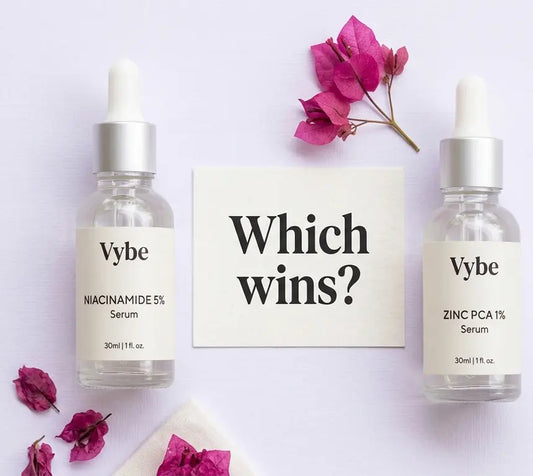
For oily skin in Pakistan: Niacinamide wins.
Here's why. Pakistan's climate — especially from March to October — is hot, humid, and merciless on oily and combination skin. Your skin is already producing excess sebum to cope with the heat and pollution. Adding a strong Vitamin C serum on top of that can cause:
- Increased sensitivity to sun (Vit C makes skin more photosensitive initially)
- Potential irritation if your barrier is already compromised from sweat and humidity
- Instability — Vitamin C oxidizes fast in humid, warm environments, so half the time you're applying an already-degraded product
Niacinamide, on the other hand, is stable in heat and humidity, oil-controlling, pore-tightening, and non-irritating. It was basically designed for oily skin in warm climates.
If you have oily, combination, or acne-prone skin — start with niacinamide. Always.
Which Serum Is Better for Dark Spots and Dull Skin?
For dull skin and dark spots: Vitamin C has the edge — but niacinamide still holds its own.
If your main concern is that your skin looks flat, grey, or uneven even on clear-skin days, Vitamin C is going to give you a more visible brightening payoff, faster. It directly interrupts pigment production at the source.
But here's the nuance: if your dark spots are from acne (post-inflammatory hyperpigmentation — the marks acne leaves behind), niacinamide is equally effective and far gentler. It works slower but without any of the irritation risk.
For the best of both worlds on dull skin: Use niacinamide AM, Vitamin C PM — or use a serum that contains niacinamide as a core ingredient alongside other brighteners.
Can You Use Vitamin C and Niacinamide Together?
Yes — and the old "don't mix them" myth is officially dead.
There was an older concern that mixing Vitamin C and Niacinamide created niacin, which could cause skin flushing. Multiple dermatology studies have since confirmed that this reaction either doesn't happen at skincare concentrations, or is so minimal it has zero real-world effect on your skin.
You can use them together, but here's how to do it right:
Option 1: Layer them (best for beginners)
- AM: Niacinamide serum → moisturizer → SPF
- PM: Vitamin C serum → moisturizer
Option 2: Mix them (advanced)
- Apply Vitamin C first (it needs to absorb at a lower pH), wait 10–15 minutes, then apply Niacinamide
The only real rule: don't skip SPF when using Vitamin C. It increases photosensitivity and all your brightening work will get undone in 20 minutes of Lahore sun.
Vybe Skin Reset Serum — Built for Oily Skin That's Done Playing Games
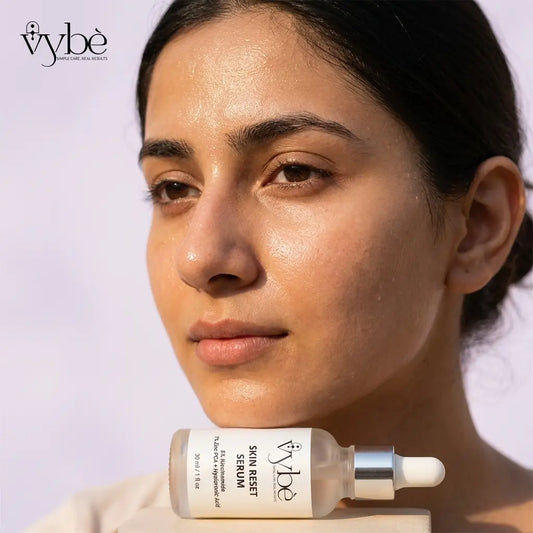
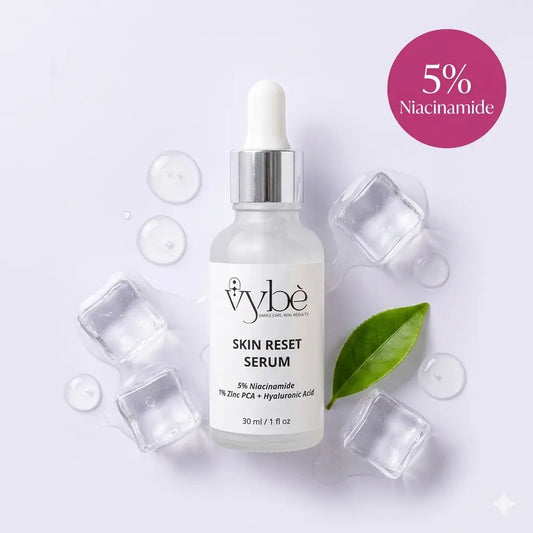
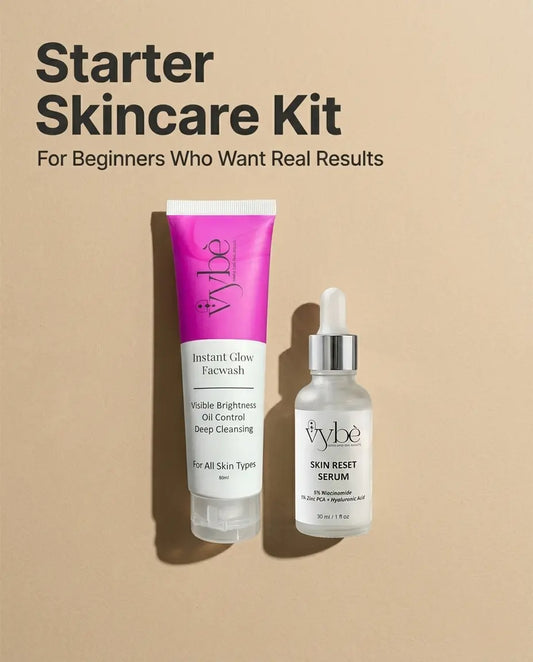
If you've read this far and you've got oily, combination, or dull skin — you already know niacinamide needs to be in your routine. Vybe's Skin Reset Serum was formulated specifically for Pakistani skin and climate conditions.
It has:
- 5% Niacinamide — the clinically studied dose for real oil control and pore tightening
- 1% Zinc PCA — adds an extra layer of sebum regulation that niacinamide alone doesn't cover
- Hyaluronic Acid — keeps your skin hydrated without clogging pores or adding grease
This isn't a "gentle" serum for people who are scared of actives. It's a targeted, results-first formula for skin that actually has issues to fix.
→ Shop the Vybe Skin Reset Serum here
How to Build a Full Routine Around Your Serum Choice
Whether you go Vitamin C, Niacinamide, or both — your serum only works as well as the routine around it.
For oily/combination skin (niacinamide-first routine):
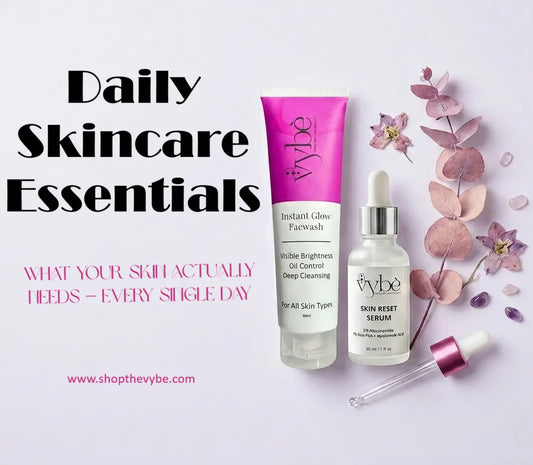
- Cleanser — Use an oil-control facewash that actually deep cleans without over-stripping. Vybe's Instant Glow Facewash is formulated for this exact skin type — it removes oil, unclogs pores, and preps your skin to absorb your serum properly. Your serum is only as effective as the surface it lands on.
- Serum — Skin Reset Serum (niacinamide + zinc PCA)
- Moisturizer — Lightweight, non-comedogenic
- SPF (AM) — Non-negotiable, especially when layering actives
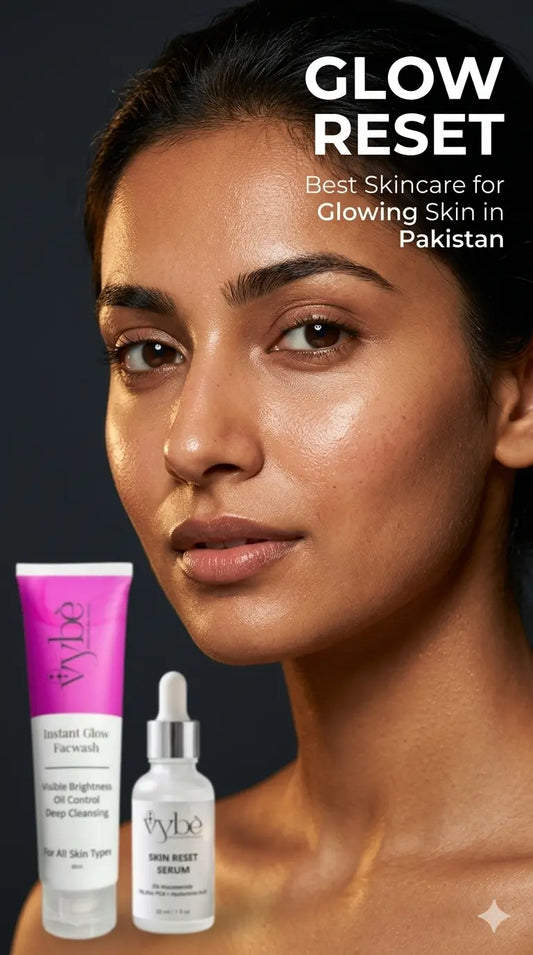
If you want the full double-down on oil control, the Vybe Glow Reset Duo gives you both the Instant Glow Facewash and the Skin Reset Serum together — it's the cleanest starting point for building a routine that actually works.
Common Mistakes People Make When Using Serums
1. Using Vitamin C in the wrong formula Not all Vitamin C serums are equal. L-ascorbic acid (the pure form) is the most effective but also the most unstable and irritating. If you're new to it, start with a derivative like ascorbyl glucoside or sodium ascorbyl phosphate — more stable, still effective.
2. Skipping cleanser before serum Your serum is working through a layer of sunscreen, pollution particles, and sebum if you don't cleanse first. A good facewash isn't optional — it's the foundation.
3. Using too many actives at once Vitamin C + Niacinamide + AHA + retinol all at once = skin barrier breakdown. Pick your priority ingredient and build from there. Add new things one at a time.
4. Storing Vitamin C wrong Heat and light degrade ascorbic acid fast. In Pakistan's climate, keep your Vitamin C serum in a cool, dark place — ideally a drawer, not your bathroom shelf.
Which Serum Is Right for You? (Quick Answer Guide)
| Your Skin Concern | Choose |
|---|---|
| Oily skin, shiny T-zone | Niacinamide |
| Large pores | Niacinamide |
| Acne-prone, breakout-prone | Niacinamide |
| Dark spots from acne (PIH) | Niacinamide or Both |
| Dull, grey, flat skin | Vitamin C |
| Uneven skin tone from sun | Vitamin C |
| Sensitive, reactive skin | Niacinamide |
| Want to use both | Niacinamide AM, Vitamin C PM |
Related Reading
If you want to go deeper into building the right routine for Pakistani skin and climate, check out these guides on the Vybe blog:
-
How to Prevent Oily Skin in Humid Weather: The Only Routine That Actually Works
-
How to Prevent Oily Skin in Humid Weather: The Only Guide You Need in Pakistan
-
Skincare Routine for Hot Weather in Pakistan: What Actually Works When It's 42°C Outside
-
You're Washing Your Face Wrong: Common Face Washing Mistakes Dermatologists Warn About
FAQ
Can I use niacinamide and vitamin C in the same routine?
Yes. The myth that they "cancel each other out" or cause skin reactions is not supported by current research. You can layer them in the same routine — just use them at different times (niacinamide in the morning, Vitamin C at night) or wait 10–15 minutes between applications if using back-to-back.
Which is better for oily skin in Pakistan — vitamin C or niacinamide serum?
Niacinamide is almost always the better starting point for oily and combination skin, especially in Pakistan's humid climate. It directly regulates sebum production, tightens pores, and is stable in heat — unlike Vitamin C which can degrade quickly and may irritate already-active oily skin.
Can niacinamide remove dark spots?
Yes — niacinamide effectively fades post-inflammatory hyperpigmentation (the dark marks left by acne). It works by inhibiting the transfer of pigment to skin cells. It's slower than Vitamin C but gentler and more suitable for sensitive or oily skin types.
What percentage of niacinamide is most effective?
5% niacinamide is the clinically validated sweet spot for oil control, pore tightening, and pigmentation. Higher percentages (10%+) don't necessarily give better results and can cause flushing or irritation in some people. Vybe's Skin Reset Serum uses exactly 5% for this reason.
Is vybe serum good for oily skin?
Vybe's Skin Reset Serum is specifically formulated for oily, combination, and dull skin. With 5% niacinamide, 1% zinc PCA, and hyaluronic acid, it targets oil control, pore appearance, and hydration — without adding grease or clogging pores. It's built for Pakistani skin and weather conditions.
#vybe #skincare #niacinamide #vitaminC #oilyskin #skincarePakistan #serumforskIn #glowingskin #vibe
Tags:
Previous
How to Prevent Oily Skin in Humid Weather: The Only Routine That Actually Works
Next
How Long Does a Serum Take to Work? The Honest Timeline for Real Results