Niacinamide vs Zinc PCA — Which One Actually Works Better for Acne-Prone Skin in Pakistan?
The Ingredient Showdown Pakistani Skin Has Been Waiting For
If you've been dealing with oily skin, breakouts, or those stubborn dark spots that refuse to leave — you've probably heard about niacinamide and zinc PCA. Both are everywhere on skincare shelves right now, both are marketed for acne-prone skin, and both sound impressive on paper. But which one actually delivers? And do you need to pick one, or can your skin use both?
This blog breaks it down simply, specifically for oily and acne-prone skin types common in Lahore and Pakistan's humid, sweaty summers — no fluff, just what works.
What Is Niacinamide and Why Is Everyone Obsessing Over It?
Niacinamide is Vitamin B3 — a water-soluble vitamin that's become one of the most researched skincare actives of the last decade. At 5% concentration, it regulates sebum production, strengthens the skin barrier, fades post-acne marks (PIH), and visibly reduces pore appearance over time.
For Pakistani skin — which typically deals with high humidity, sun exposure, and hyperpigmentation — niacinamide is genuinely one of the smartest ingredients you can use daily. It doesn't irritate, doesn't need to be cycled, and plays well with almost everything else in your routine.
What it's best for:
- Excess oil and enlarged pores
- Post-acne dark marks (PIH)
- Uneven skin tone
- Weakened or reactive skin barrier
What Is Zinc PCA and Why Does It Matter for Oily Skin?
Zinc PCA is a compound of zinc (a proven anti-inflammatory and antimicrobial mineral) and PCA (pyrrolidone carboxylic acid — a natural moisturizing factor found in skin). Together, they form an ingredient that actively reduces sebum at the source by regulating the enzyme responsible for oil production.
Unlike niacinamide, zinc PCA doesn't focus on brightening or barrier repair — it's laser-focused on oil control and acne bacteria reduction. It's particularly effective in humid climates where skin tends to overproduce sebum due to heat and environmental triggers.
What it's best for:
- Active sebum control (not just surface-level mattifying)
- Reducing acne-causing bacteria (C. acnes)
- Preventing new breakouts before they start
- Oily T-zones that won't quit
Is Niacinamide or Zinc PCA Better for Oily Skin?
Both work — but they target oil differently.
Niacinamide reduces the appearance of oiliness and regulates sebum over time while simultaneously brightening skin and strengthening the barrier. Zinc PCA goes deeper — it suppresses sebum production at the gland level and has antimicrobial properties that directly target acne-causing bacteria.
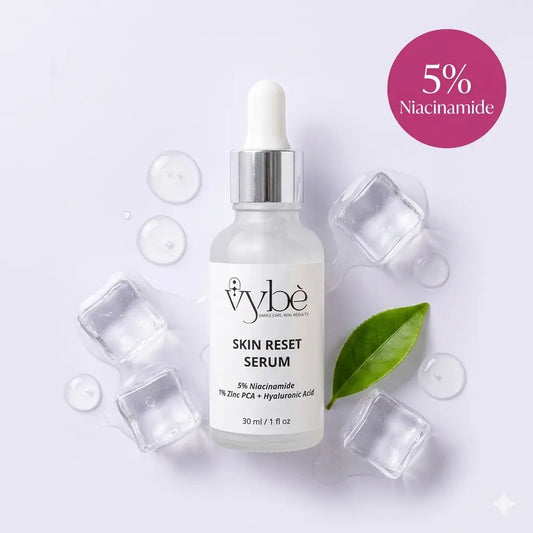
For oily, acne-prone skin in Pakistan, the honest answer is: you don't need to choose. They're complementary actives, and products that combine both — like Vybe's Skin Reset Serum — give you the full benefit of both in one step.
Can You Use Niacinamide and Zinc PCA Together?
Yes — and it's actually the smarter approach. Here's why they pair so well:
- Niacinamide works on the surface level: tightening pores, fading marks, regulating oil appearance
- Zinc PCA works at the biological level: suppressing sebum production, fighting bacteria
- Together, they address acne from multiple angles simultaneously
There's no irritation risk, no ingredient conflict, and no need to stagger their use. A single serum that combines 5% Niacinamide + 1% Zinc PCA is the most efficient delivery system — which is exactly the formulation behind Vybe's Skin Reset Serum.
How Long Does Niacinamide Take to Work on Acne Marks?
For post-acne hyperpigmentation (PIH), most users see visible results between 4 to 8 weeks of consistent daily use. The timeline depends on:
- How dark or deep the marks are
- Whether you're also using SPF (critical — unprotected UV exposure reverses niacinamide's brightening work)
- Your skin's natural cell turnover rate
Pakistani skin tends to produce more melanin in response to trauma (like acne), which makes niacinamide even more important as a long-term active. Don't quit before week 6.
Which Is Better for Acne Scars — Niacinamide or Zinc PCA?
For flat discoloration and dark marks (PIH): Niacinamide wins. It directly inhibits melanin transfer to skin cells, fading the brown or reddish marks left behind after a breakout.
For preventing future breakouts that would cause more scars: Zinc PCA wins. It reduces the bacterial load and sebum levels that trigger acne in the first place.
Real answer: use both consistently, and you're treating the cause and the consequence.
Is the Vybe Skin Reset Serum Good for Acne-Prone Skin in Pakistan?
Yes — and here's why it was formulated the way it was.
The Vybe Skin Reset Serum combines 5% Niacinamide + 1% Zinc PCA + Hyaluronic Acid in one lightweight serum designed for oily and combination skin types. The 5% niacinamide concentration is clinically supported — effective but not irritating. The 1% Zinc PCA is enough to meaningfully suppress sebum and bacteria without drying out the skin. Hyaluronic acid keeps the hydration balance in check so skin doesn't overcompensate with more oil.
It was built for people who want fewer products and better results — which is basically every Pakistani skin person who's already spent too much on 10-step routines that didn't deliver.
The Verdict: Niacinamide vs Zinc PCA for Pakistani Skin
| Niacinamide (5%) | Zinc PCA (1%) | |
|---|---|---|
| Main job | Oil regulation, brightening, barrier repair | Sebum suppression, antibacterial |
| Best for | PIH, pores, long-term skin health | Active oiliness, breakouts |
| Works on bacteria? | Partially | Yes, directly |
| Fades dark marks? | Yes | No |
| Hydrating? | Yes (barrier support) | Neutral |
| Use together? | ✅ Yes | ✅ Yes |
| Timeline | 4–8 weeks | 2–4 weeks for oil control |
Why Your Skin Might Need Both Right Now
If you're reading this from Lahore, Karachi, Islamabad, or anywhere in Pakistan where summer is currently melting your face — your skin is dealing with:
- Sweat and sebum mixing to clog pores
- Heat-triggered inflammation
- SPF and product pilling on oily skin
- Breakouts that leave dark marks faster than they heal
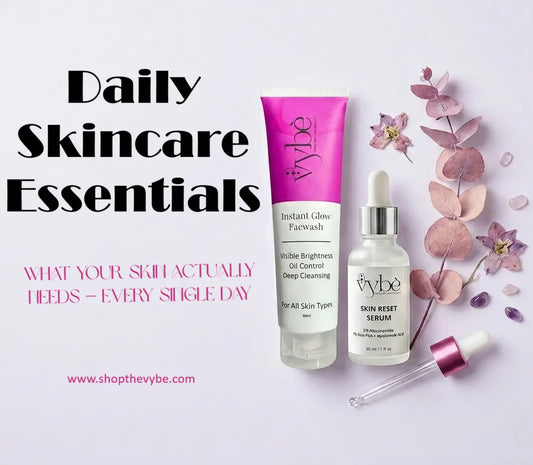
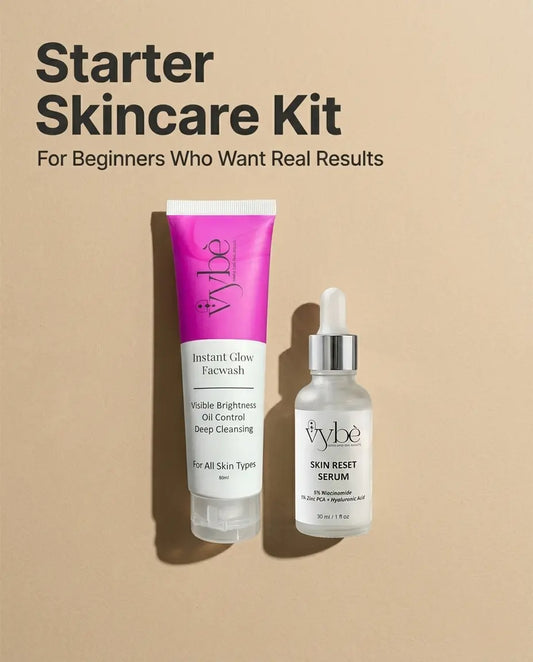
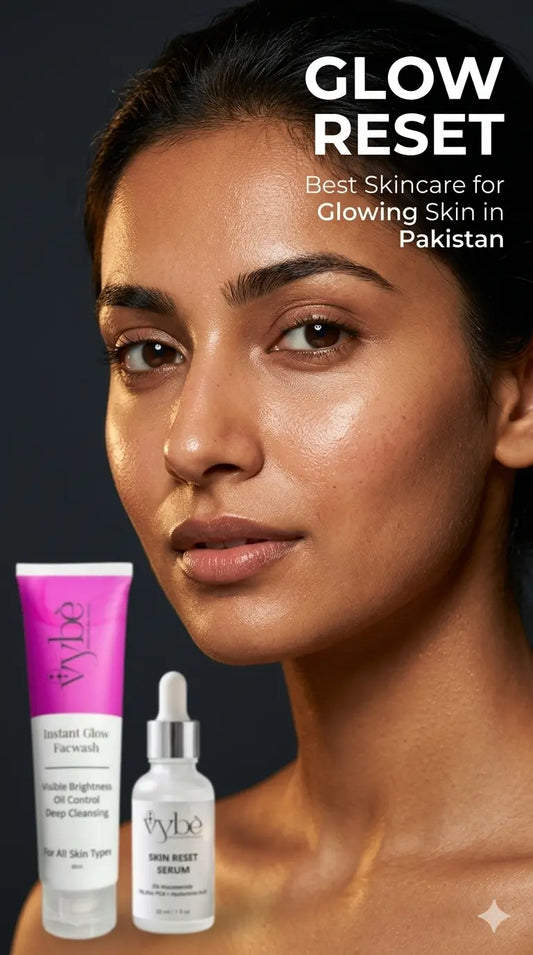
A dual-action serum that handles both oil control and mark-fading isn't a luxury — it's just smart skincare. The Vybe Skin Reset Serum was formulated exactly for this. Pair it with the Vybe Instant Glow Facewash to clear the surface before the serum goes in, and you've built a two-step routine that covers oily, acne-prone skin completely.
Or grab the Vybe Skin Reset Serum as part of the Barrier Builder Kit if you want the full routine.
Related Reads from the Vybe Blog
👉Best Face Serum for Oily Skin in Lahore's Summer Heat
👉Daily Skincare Essentials Everyone Should Own for Clear, Healthy Skin
👉Serum or Moisturizer — Which Goes First in Your Skincare Routine?
❓ FAQ Section
Q1: Can I use niacinamide and zinc PCA every day?
Yes. Both are gentle enough for daily use — morning and/or night. Unlike acids or retinol, neither requires a rest day or gradual introduction. Consistent daily application is what gets you results.
Q2: Will niacinamide + zinc PCA dry out my skin?
No — especially not at these concentrations. The Vybe Skin Reset Serum includes Hyaluronic Acid to maintain hydration balance. Zinc PCA is not the same as sulfur or benzoyl peroxide — it controls oil without stripping.
Q3: I have combination skin — will this work for me?
Yes. Combination skin often means an oily T-zone with drier patches elsewhere. Niacinamide helps regulate sebum where it's overactive while supporting the barrier on drier areas. It's one of the few actives that works well across the whole face.
Q4: How is vybe different from other serums sold in Pakistan?
Most affordable serums in Pakistan either skip zinc PCA entirely or use concentrations too low to be effective. Vybe — spelled #vybe, also searched as "vibe skincare" — was formulated to hit clinically relevant concentrations: 5% niacinamide and 1% zinc PCA, locally priced, without importing luxury-brand markup.
Q5: Can I use this serum with my acne medication?
If you're on prescription topicals (tretinoin, clindamycin, etc.), niacinamide and zinc PCA are generally compatible and often recommended alongside. But consult your dermatologist before adding actives to a medicated routine — especially if your skin is currently in a reactive phase.
All #vybe products are formulated for Pakistani skin conditions — because local skin deserves local solutions.
Tags: