Stop Using These Face Wash Ingredients — They're Silently Destroying Your Skin
Face Wash Ingredients to Avoid in Pakistan (That Are Wrecking Your Skin)
Most Pakistani girls are unknowingly using a face wash that's working against them. The lather feels satisfying. The skin feels squeaky clean after. But two weeks in — breakouts, dryness, tight skin, or a sudden sensitivity that wasn't there before.
The problem isn't your skin. It's the ingredients in your face wash.
If you're serious about building a skincare routine that actually works, knowing which face wash ingredients to avoid in Pakistan is non-negotiable — especially with Lahore's humidity, Karachi's heat, and the hard water most of us wash our faces with daily. This guide breaks it all down so you can stop guessing and start making smarter choices for your skin.
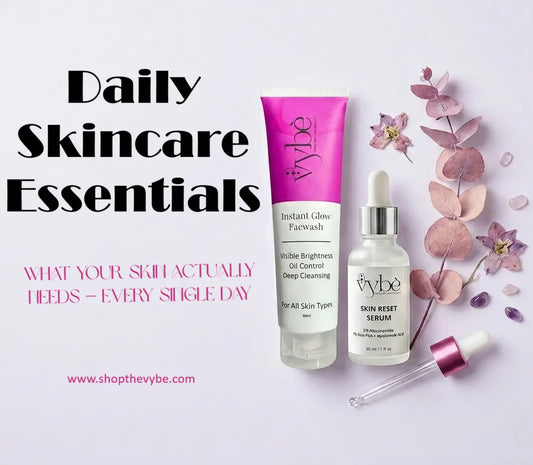
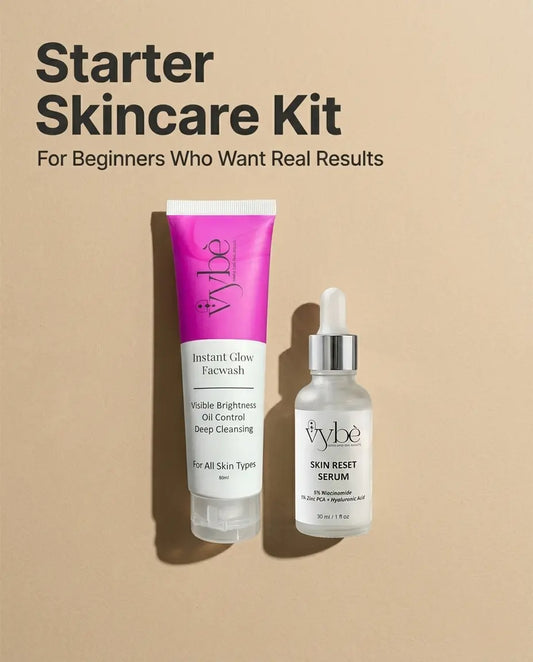
And if you're ready to switch to something that's actually formulated for results — not just marketing buzz — Vybe's Instant Glow Facewash skips all the junk and gets straight to the point.
What Ingredients in Face Wash Should I Avoid?
Not all face wash ingredients are created equal. Some are outdated formulations that brands still use because they're cheap. Others cause short-term "clean" feelings while wrecking your skin barrier long-term. Here are the biggest offenders:
1. Sodium Lauryl Sulfate (SLS)
SLS is the ingredient responsible for that aggressive foam you get from cheap face washes. It strips your skin of its natural oils so completely that your sebaceous glands panic and overproduce oil — which ironically makes oily skin worse, not better.
In Pakistan's climate, where your skin is already under heat and humidity stress, SLS accelerates dehydration and can trigger contact dermatitis over time.
2. Artificial Fragrances (Parfum)
"Parfum" on an ingredient list can represent a cocktail of up to 3,000 different chemicals — none of which need to be individually disclosed. For acne-prone or sensitive Pakistani skin, artificial fragrances are one of the top causes of irritation, redness, and clogged pores.
3. Alcohol (Denatured or SD Alcohol)
Alcohol-based face washes promise oil control but deliver dehydration. They temporarily mattify the skin, then trigger rebound oiliness. If your T-zone is looking shiny again within an hour of washing your face, there's a good chance alcohol is the culprit.
4. Parabens (Methylparaben, Propylparaben, Butylparaben)
Parabens are preservatives linked to hormone disruption in several studies. While the debate is ongoing globally, why use a face wash that's under a question mark when paraben-free alternatives exist?
5. Polyethylene (Plastic Microbeads)
These were marketed as "exfoliating" scrub particles. They don't exfoliate — they micro-scratch your skin surface, damage the skin barrier, and then wash down the drain as microplastics. Some Pakistani brands still sell these. Hard pass.
6. Formaldehyde-Releasing Preservatives
Ingredients like DMDM Hydantoin, Diazolidinyl Urea, and Imidazolidinyl Urea slowly release formaldehyde in a formula. These cause allergic reactions, scalp issues, and long-term sensitivity — particularly problematic with daily use.
7. Synthetic Dyes (FD&C Colors)
The blue or pink tint in your face wash adds zero skincare benefit. Synthetic colorants are known irritants and are particularly problematic for those with rosacea or reactive skin.
Is SLS in Face Wash Really That Bad?
Yes — especially for Pakistani skin types.
SLS (Sodium Lauryl Sulfate) disrupts the skin's natural acid mantle, which sits at a pH of around 4.5–5.5. Most SLS-heavy face washes have a pH of 9–11, which is alkaline enough to strip your barrier completely. Once that barrier is compromised, your skin becomes vulnerable to:
- Acne-causing bacteria entering pores more easily
- Transepidermal water loss (TEWL) — basically your skin leaking moisture
- Hyperpigmentation from chronic low-grade inflammation
- Increased sensitivity to everything else in your routine
For oily or combination skin in a humid Pakistani summer, this creates a vicious cycle: strip → rebound oil → wash more aggressively → strip again.
Which Face Wash Ingredients Are Safe and Actually Work?
Now that you know what to avoid, here's what should be in your face wash:
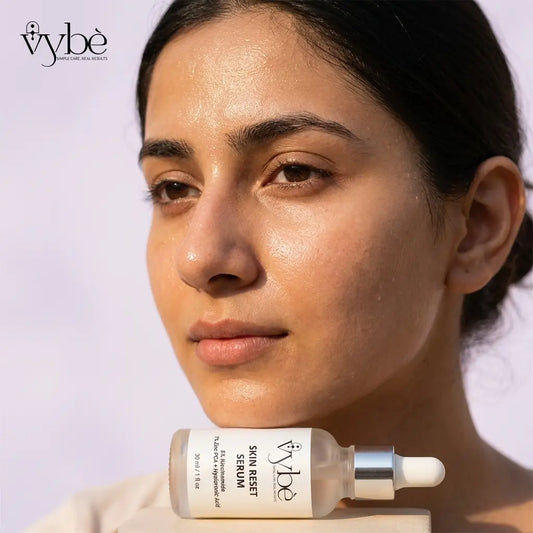
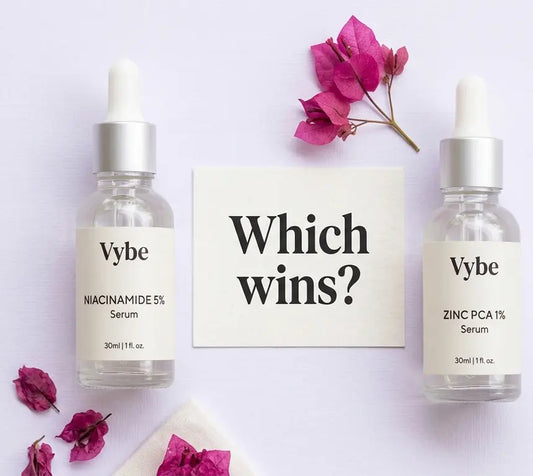
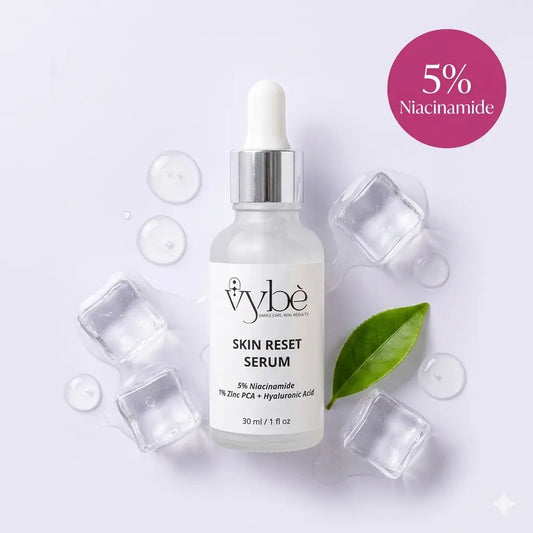
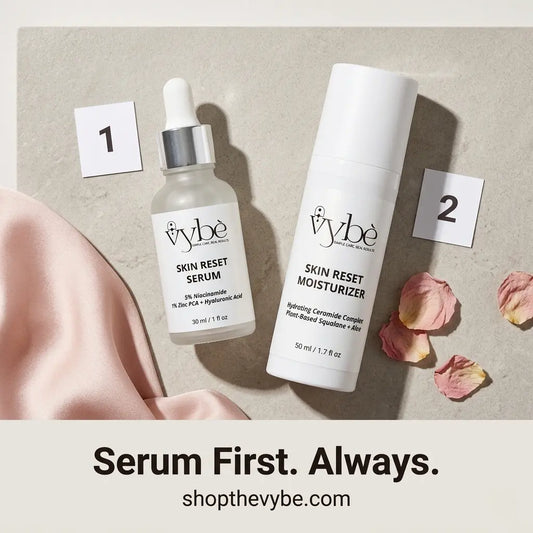
Niacinamide — Regulates oil, fades dark spots, strengthens the barrier. The gold standard for Pakistani skin tone and texture concerns. Vybe's Skin Reset Serum stacks 5% Niacinamide with Zinc PCA and Hyaluronic Acid for a complete post-cleanse treatment.
Zinc PCA — Controls sebum production at the source. Works synergistically with Niacinamide without over-drying.
Salicylic Acid (BHA) — At low percentages (0.5–2%), it gently exfoliates inside the pore, breaking down the sebum and dead skin buildup that causes blackheads and whiteheads.
Hyaluronic Acid — A humectant that draws moisture into the skin. Cleanser-based HA helps prevent the tight, pulled feeling after washing.
Gentle Surfactants (Cocamidopropyl Betaine, Sodium Cocoyl Isethionate) — These clean without destroying. They provide effective cleansing at skin-compatible pH levels.
Does Fragrance in Face Wash Cause Acne?
It can, yes — and it's more common than people realize.
Fragrance is one of the most frequent causes of contact dermatitis in skincare products. For acne-prone skin, fragrance triggers inflammatory responses that look like breakouts but are actually allergic reactions. The tricky part is that the reaction is often delayed by 24–48 hours, making it hard to connect the dots.
In Pakistan, where everyone is already dealing with pollution, sun exposure, and dietary triggers for breakouts, adding a fragrance-heavy face wash to the equation just piles on more stress for your skin barrier.
If you've been switching face washes constantly without improvement, fragrance is a prime suspect. Go fragrance-free for 4 weeks and watch what happens.
Are Cheap Pakistani Face Washes Full of Harmful Ingredients?
Many are — but price alone isn't the deciding factor.
Budget face washes in Pakistani drugstores and markets frequently rely on SLS, artificial fragrances, parabens, and synthetic dyes because these ingredients are cheap to source in bulk. Larger international brands sold in Pakistan aren't always cleaner either — global formulas are often not updated for years.
The better approach: read ingredient labels before price tags. The first five ingredients on a list make up the bulk of the formula. If SLS or parfum is in that top five, put it back.
For a deeper dive into building a complete routine that avoids these pitfalls, check out our guide on Affordable Skincare Routine in Pakistan: The Only Budget Guide You Actually Need, Serum or Moisturizer — Which Goes First in Your Skincare Routine? and Best Skincare Products for Glowing Skin in Pakistan (That Actually Work in This Climate).
How to Check If Your Face Wash Has Harmful Ingredients
You don't need a chemistry degree. Here's a simple process:
Step 1 — Grab your current face wash and flip it. Look at the ingredient list (INCI list). Ingredients are listed in descending order by concentration.
Step 2 — Search the first 5 ingredients. Use INCIDecoder.com or CosDNA.com to check each ingredient for its safety score and function.
Step 3 — Red flag check. Look for: SLS, Sodium Laureth Sulfate (SLES), Parfum, Denatured Alcohol, any -paraben suffixes, DMDM Hydantoin, Polyethylene.
Step 4 — pH check. A good face wash should sit between pH 4.5–6.5. Litmus strips or a pocket pH meter cost under Rs. 500 and tell you instantly.
Step 5 — Switch and track. Give any new cleanser a minimum 4-week trial before evaluating results. Skin doesn't change overnight.
If you want to skip the homework entirely, Vybe's Instant Glow Facewash is formulated without SLS, artificial fragrances, or parabens — built for deep cleaning and oil control without the damage.
The Vybe Approach to Cleansing
At Vybe, the philosophy is simple: ingredients that work, zero ingredients that don't. The Instant Glow Facewash is designed for Pakistani skin — accounting for heat, humidity, oily skin types, and the hard water most of us use daily. No parfum. No SLS. No filler. Just a clean, effective wash that preps your skin for everything that comes after.
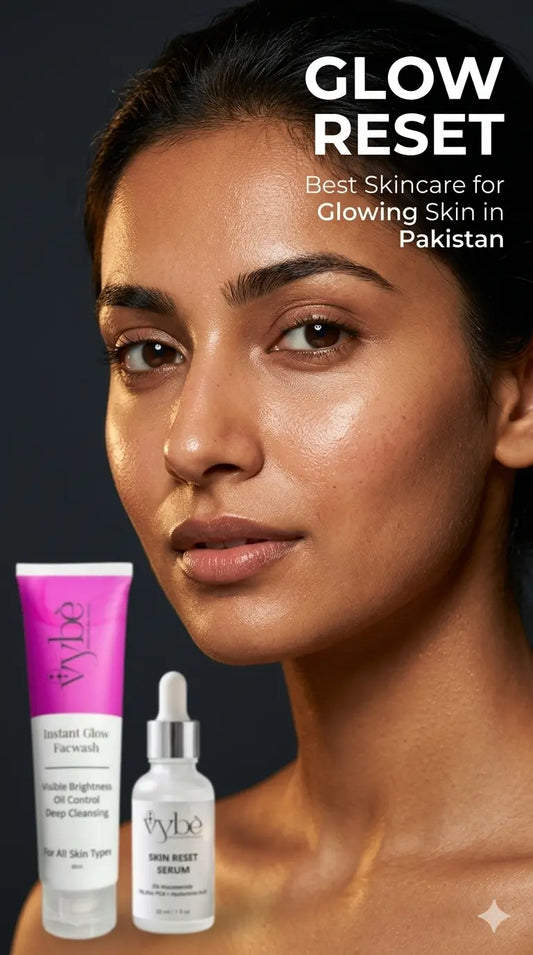
For a complete routine reset, the Glow Reset Duo pairs the facewash with the Skin Reset Serum — a 1-2 punch that cleanses and then actively repairs your skin barrier.
That's the vybe. That's the vibe.
FAQ: Face Wash Ingredients to Avoid
Q: Is Sodium Lauryl Sulfate (SLS) dangerous? A: SLS is not dangerous in a toxicological sense, but it is damaging to your skin barrier — especially with daily use. It's too harsh for facial skin and is the primary cause of the "tight skin" feeling after washing. Avoid it in any cleanser you use more than once or twice a week.
Q: Can face wash ingredients cause hormonal acne? A: Indirectly, yes. Ingredients like parabens are classified as endocrine disruptors, meaning they may interfere with hormone signaling at a cellular level. For those already dealing with hormonal acne, using products with parabens adds an unnecessary variable.
Q: Are all sulfate-free face washes gentle? A: Sulfate-free doesn't automatically mean gentle. A face wash can be sulfate-free but still contain alcohol, synthetic fragrances, or harsh exfoliants. Always read the full ingredient list.
Q: What face wash ingredients are best for oily skin in Pakistan? A: Look for Salicylic Acid, Zinc PCA, and Niacinamide. These control sebum at the source, exfoliate inside the pore, and strengthen the barrier — without the rebound oiliness caused by stripping ingredients like SLS or alcohol.
Q: How do I know if my face wash is breaking me out? A: Do an elimination test. Stop using your current face wash and switch to a minimal, fragrance-free, SLS-free cleanser for 4 weeks. If breakouts reduce, your old face wash was a trigger. Common culprits: fragrance, coconut-derived oils (pore-clogging), SLS, and synthetic dyes.
Stay ingredient-aware. Your skin reads every label, even when you don't. #vybe
Tags:
Previous
Serum or Moisturizer — Which Goes First in Your Skincare Routine?
Next
Best Starter Skincare Kit for Beginners in Pakistan (That Actually Works)