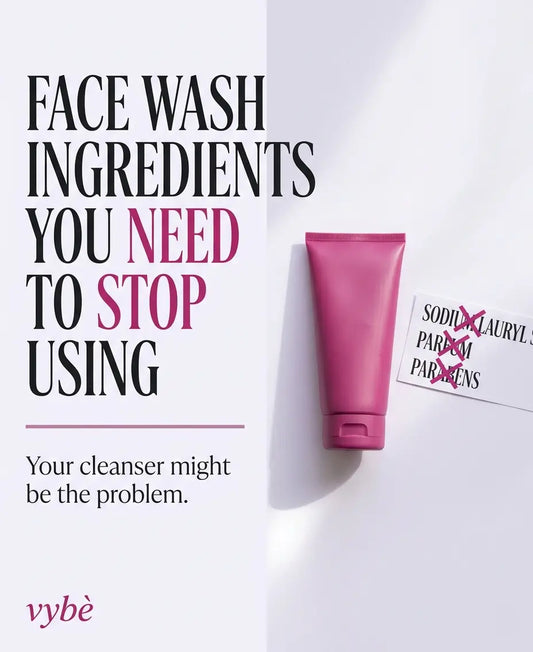
You're Washing Your Face Wrong: Common Face Washing Mistakes Dermatologists Warn About
Your Skincare Is Failing Because of Step One
If you're spending money on serums, moisturizers, and SPF but still breaking out or looking dull — the problem might not be your products. It's how you're washing your face. Dermatologists consistently flag face washing mistakes as one of the leading causes of damaged skin barriers, clogged pores, and wasted skincare spend. In this guide, we're breaking down every mistake you're probably making — and what to do instead.
Why Does Your Cleanser Matter So Much?
Most people treat face washing as the boring first step — just a formality before the "real" skincare. But your cleanser sets the condition of your skin for everything that follows. A bad wash strips your barrier, inflates sebum production, and makes even the most expensive serum work against you.
Dermatologists rank improper cleansing alongside sun damage and dehydration as a top accelerator of premature skin aging. If your canvas is compromised, nothing else performs.
Are You Washing Your Face Too Many Times a Day?
Yes — over-washing is a real problem. The general recommendation from dermatologists is twice daily — once in the morning and once at night. More than that and you're stripping the skin's natural oils, triggering rebound oil production, and destroying the moisture barrier.
For people with oily or acne-prone skin, this feels counterintuitive. More washing = cleaner skin, right? Wrong. Over-cleansing signals to your sebaceous glands that they need to produce more oil — making congestion worse, not better.
The fix: Cleanse twice a day. If your skin feels tight, dry, or "squeaky clean" after washing, your cleanser is either too harsh or you're using it too often.
Does Water Temperature Affect Your Skin When Washing?
Absolutely — and most people are doing this wrong. Hot water feels satisfying, especially in winter, but it actively damages your skin by breaking down the lipid layer that keeps moisture locked in.
Cold water isn't the answer either. Ice-cold water doesn't open or close pores (pores don't have muscles — they can't), and it doesn't fully dissolve oil-based impurities.
Dermatologist recommendation: Use lukewarm water — warm enough to activate a gel cleanser, cool enough not to inflame. This is non-negotiable.
Is Your Cleanser Actually Right for Your Skin Type?
Using a creamy, milky cleanser on oily skin? Using a foaming gel on dry, sensitive skin? Both are mistakes. Your cleanser needs to match your skin's actual needs — not what you read on a generic skincare chart or what looks aesthetic in a flat lay.
For oily, acne-prone, and combination skin — a deep cleansing gel with active ingredients like activated charcoal is the right format. It draws impurities out of pores without leaving a film.
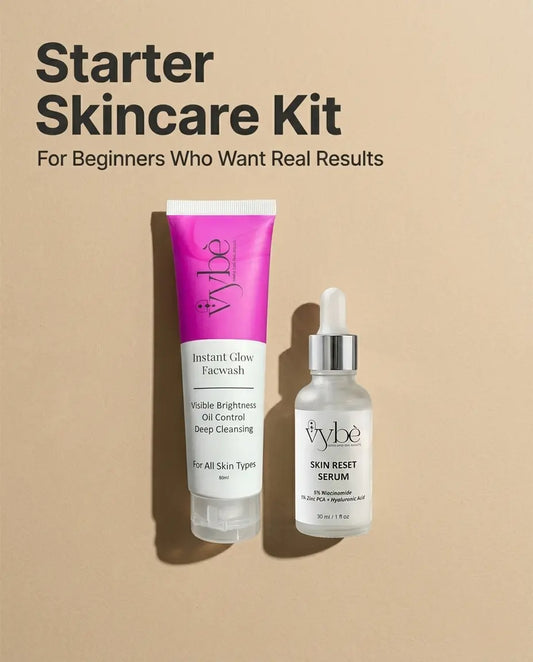
The Vybe Instant Glow Facewash is built exactly for this: an 80ml deep cleansing gel with activated charcoal that targets pore congestion, controls excess oil, and delivers visible brightness — without over-drying. It's one of the few Pakistani skincare options that approaches cleansing with actual formulation logic, not just fragrance and foam.
For dry or mature skin, a gel will feel stripping. Go for a cream or milk formula with humectants.
The fix: Know your skin type, then match the cleanser format to it. Not the brand. The format.
Are You Rinsing Your Face Properly?
Residual cleanser left on your skin is one of the most underrated causes of breakouts and irritation. Most people splash water two or three times and assume they're done. They're not.
Cleanser that isn't fully rinsed off sits on your skin, continues to react with your sebum, and clogs pores — especially around the hairline, jawline, and nose where people tend to rush.
The fix: Take at least 30 seconds to rinse. Get the hairline. Get under the chin. Use clean hands in a cupping motion rather than splashing, which just moves residue around.
Are You Patting or Rubbing Your Face Dry?
Rubbing your face dry with a towel is a mechanical exfoliation your face didn't ask for. It creates micro-tears in skin — especially in the delicate under-eye and cheek areas — and worsens conditions like rosacea, eczema, and active acne.
The fix: Pat dry with a clean towel. Dermatologists recommend a separate face towel washed at minimum every 2–3 days. A damp towel harbors bacteria that transfers directly to your freshly cleaned skin.
Are You Skipping Cleanser After a Workout?
Sweat itself isn't the main problem — but sweat mixed with environmental pollutants, sunscreen, and sebum sitting on your skin for an extended period is. If you're working out and not cleansing after, you're giving everything bad on your face extra time to settle into your pores.
The fix: Cleanse after any significant sweat session. If you're mid-day and can't do a full routine, use your face wash with lukewarm water and skip the rest — a clean face is better than nothing.
What Happens If You Don't Moisturize After Cleansing?
Your cleanser opens up your skin — it removes the layer of oil and debris that was sitting on top. What you do in the two minutes after cleansing determines whether your skin rebuilds its barrier or stays compromised.
Skipping a serum or moisturizer post-wash means your skin loses hydration rapidly, especially in dry climates or air-conditioned rooms. This leads to tightness, flakiness, increased oil production, and over time, barrier breakdown.
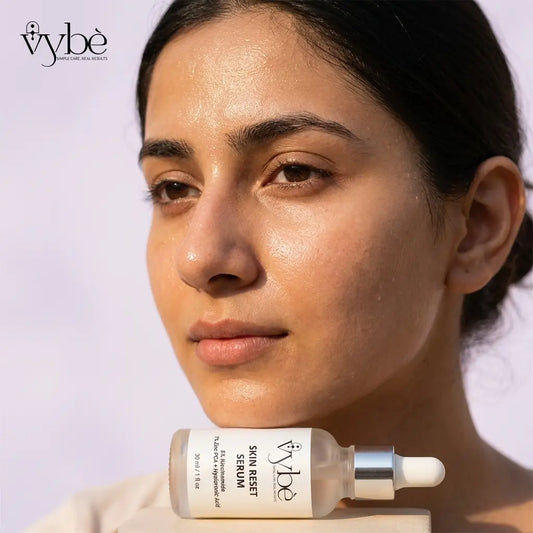
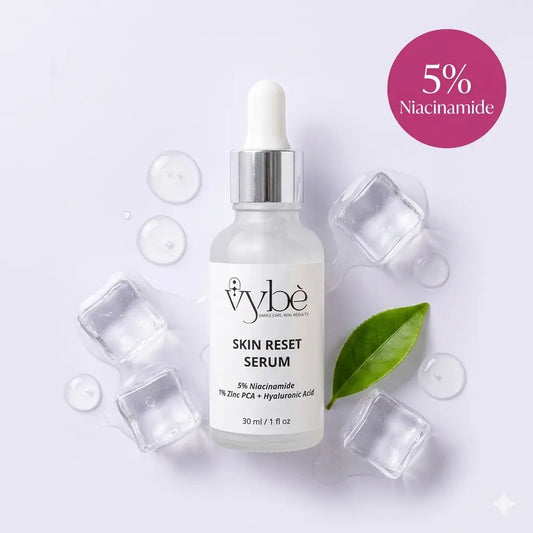
The Vybe Skin Reset Serum — 5% Niacinamide + 1% Zinc PCA + Hyaluronic Acid — is designed as the immediate next step after cleansing. Niacinamide regulates oil, zinc reduces inflammation, and hyaluronic acid locks hydration in while your barrier recovers. Together as the Glow Reset Duo, they create a complete cleanse-to-treat system.
→ Read more: why your facewash makes your skin dry & how to fix it?
→ Read more: Niacinamide benefits for Beginners
FAQ: Face Washing Mistakes Dermatologists Warn About
Q1: How many times should I wash my face in a day? Twice — morning and night. Over-washing disrupts your skin's natural oil balance and can worsen acne, dryness, and sensitivity.
Q2: Is hot water bad for washing your face? Yes. Hot water breaks down the lipid barrier, causes redness, and accelerates moisture loss. Always use lukewarm water when cleansing.
Q3: Can the wrong cleanser cause acne? Absolutely. A cleanser that doesn't match your skin type — too heavy, too stripping, or wrong pH — directly contributes to breakouts, excess oil, and clogged pores.
Q4: Should I wash my face after the gym? Yes. Sweat mixed with pollutants and sebum sitting on your skin after exercise clogs pores and increases breakout risk. Cleanse post-workout whenever possible.
Q5: What's the best face wash in Pakistan for oily skin? The Vybe Instant Glow Facewash — an activated charcoal deep cleansing gel formulated specifically for oily, combination, and acne-prone skin. Available at shopthevybe.com.
#vybe #vibe #skincare #facewash #pakistaniskincare #oilyskin #glowup #skincaretips #acneprone #skincarePakistan
Tags:
Previous
Niacinamide Serum Benefits for Beginners (Complete Guide for Pakistani Skin Types)
Next
Skincare Routine for Hot Weather in Pakistan: What Actually Works When It's 42°C Outside