Serum or Moisturizer — Which Goes First in Your Skincare Routine?
Serum First, Moisturizer Second — Here's Why Order Matters
If you've ever wondered whether serum or moisturizer goes first in your skincare routine, you're not alone — this is one of the most searched skincare questions in Pakistan right now, and getting it wrong can literally cancel out the products you're paying for. The rule is simple: serum goes before moisturizer, every single time. But understanding why — and knowing how to actually layer them correctly — is what separates people who see results from those who don't. Whether you're building a beginner routine or fixing what's not working, this guide gives you the full breakdown.
Why Does Skincare Layering Order Actually Matter?
Skincare products are formulated to absorb at specific skin depths. Serums contain small, concentrated molecules — like Niacinamide, Hyaluronic Acid, or Vitamin C — designed to penetrate deep into the skin. Moisturizers, on the other hand, are heavier and sit on top of the skin to seal in hydration and protect the barrier.
If you apply moisturizer first, you're essentially putting a lock on your skin before the serum can get in. The active ingredients in your serum — the ones you actually paid for — end up sitting on top of the moisturizer doing nothing.
The golden rule in skincare is always: thinnest to thickest, lightest to heaviest.
That's why your routine should go: Cleanser → Toner (if you use one) → Serum → Moisturizer → SPF (morning only).
What Happens If You Apply Moisturizer Before Serum?
Applying moisturizer before serum creates a physical barrier between the serum and your skin. Most moisturizers contain occlusives — ingredients like dimethicone, shea butter, or petroleum — that literally form a film over your skin. Once that film is there, your serum's active ingredients can't penetrate effectively.
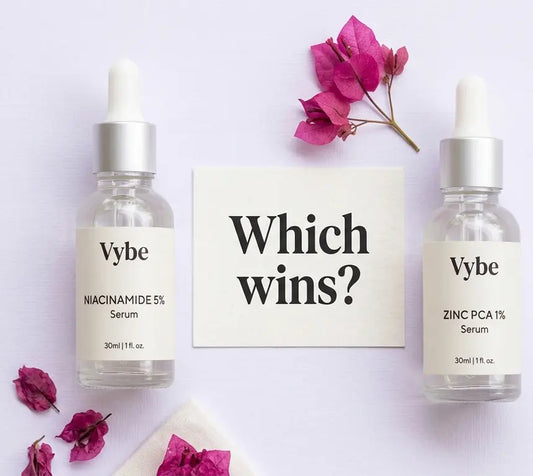
The result? You're spending money on a serum that isn't working. Worse, if your serum contains actives like Niacinamide or Zinc PCA for oil control, you're missing out on their core function — regulating sebum, minimizing pores, and strengthening your skin barrier.
Always serum first. Always.
How Long Should You Wait Between Serum and Moisturizer?
This is where a lot of people lose patience and rush through their routine. Ideally, you should wait 60–90 seconds after applying your serum before putting on moisturizer. This gives the active ingredients time to absorb into the skin rather than mixing with the moisturizer on the surface.
You don't need a timer. Just apply your serum, do something else for a minute — brush your teeth, check your phone — then come back and apply your moisturizer. That small pause can genuinely make the difference between a serum that works and one that doesn't.
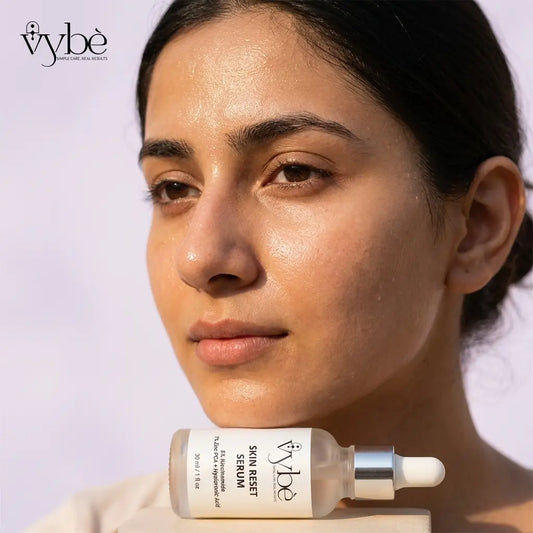
If your serum contains Hyaluronic Acid (like Vybe's Skin Reset Serum), applying moisturizer within a reasonable window is also important — HA draws moisture from the environment, and sealing it in with moisturizer ensures that hydration stays in your skin instead of evaporating.
Can You Mix Serum and Moisturizer Together?
Short answer: no, and you shouldn't.
Mixing them together dilutes the concentration of your serum's actives and throws off how both products are formulated to behave. Serums are water-based; many moisturizers are oil-based. When you mix them, you're disrupting both formulations without knowing what the outcome will be.
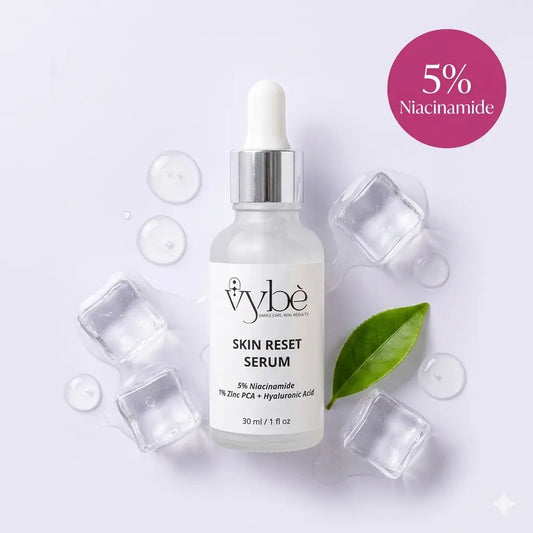
Some people do this to "save time," but it defeats the entire purpose of using a targeted serum. A serum like Vybe Skin Reset Serum is specifically formulated with 5% Niacinamide + 1% Zinc PCA + Hyaluronic Acid at precise concentrations. Mixing it into a moisturizer drops that concentration and changes how it interacts with your skin.
Keep them separate. Use them in the right order. Let each product do its job.
What Is the Correct Skincare Routine Order for Oily Skin in Pakistan?
Pakistan's climate — especially in cities like Karachi, Lahore, and Islamabad — means heat and humidity are working against you almost year-round. For oily and combination skin in this environment, layering becomes even more critical because you want to control sebum without stripping the skin's barrier.
Here's the routine order that works:
Morning:
- Cleanser (activated charcoal gel works great for deep-cleaning without over-drying)
- Serum (Niacinamide + Zinc PCA for oil control and pore tightening)
- Lightweight moisturizer
- SPF 30 or higher
Night:
- Cleanser
- Serum
- Moisturizer (you can go slightly heavier at night since you're not layering SPF on top)
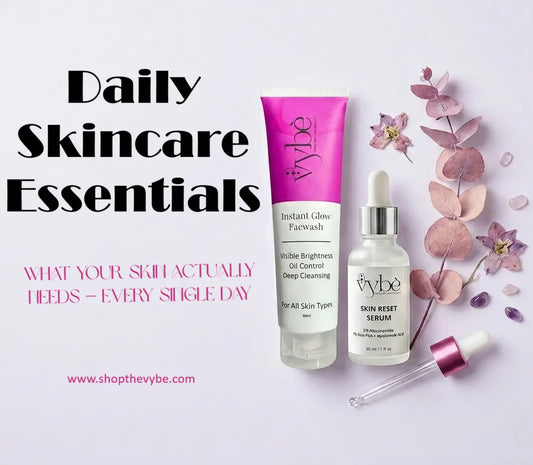
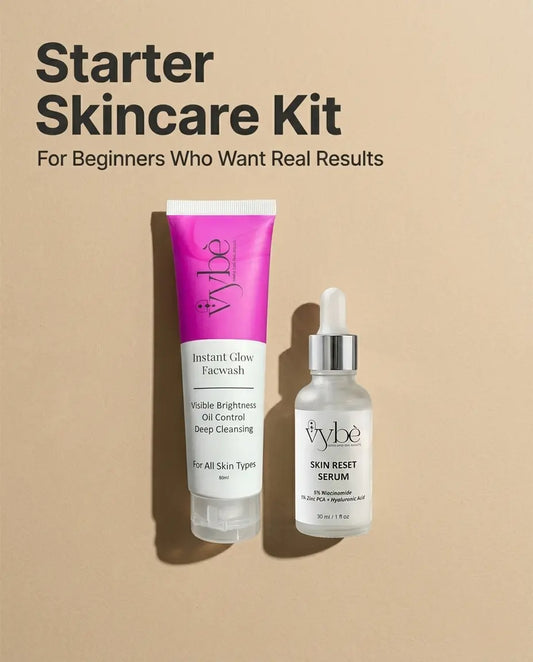
For oily skin in humid Pakistani weather, the Vybe Glow Reset Duo — which pairs the Instant Glow Facewash with the Skin Reset Serum — is built specifically for this. The charcoal cleanser deep-cleans pores while the serum regulates oil and strengthens the skin barrier without making your face feel heavy or greasy.
Want a deeper breakdown of oily skin routines for Pakistani weather? Check out our guide on Best Skincare Products for Glowing Skin in Pakistan (That Actually Work in This Climate.
Affordable Skincare Routine in Pakistan: The Only Budget Guide You Actually Need
Does Serum Go Before or After Toner?
Yes — serum goes after toner, not before. The correct order is:
Cleanser → Toner → Serum → Moisturizer
Toners are used to balance the skin's pH after cleansing and prep the skin to absorb what comes next. Applying serum after toner means the skin is already primed and slightly hydrated, which helps the active ingredients penetrate better.
If you skip toner (which is completely fine — it's optional), you go straight from cleanser to serum. The key is that moisturizer always comes after the serum, not before.
Morning vs Night: Should You Use Serum Differently?
Your morning and night routines can actually use the same serum — but what changes is what you layer on top.
Morning: Serum → Moisturizer → SPF. The SPF must always be the last step in your morning routine. If your serum contains any actives, SPF protects them from UV degradation.
Night: Serum → Moisturizer. Without SPF in the way, your skin can focus on repair and absorption overnight. Niacinamide, in particular, works well at night because it supports the skin barrier while you sleep.
The Vybe Skin Reset Serum is designed for both AM and PM use — the formula is lightweight enough that it doesn't feel heavy under SPF in the morning, and effective enough for overnight repair.
FAQ: Serum or Moisturizer — What Goes First?
Q: Does serum go before or after moisturizer? Serum always goes before moisturizer. Serums have smaller molecules that need to penetrate the skin directly. Moisturizer is heavier and seals everything in. Applying moisturizer first blocks the serum from absorbing properly.
Q: Can I skip moisturizer if I'm using a serum? No. A serum and a moisturizer do different jobs. Serums deliver targeted active ingredients; moisturizers hydrate, protect, and seal the skin barrier. You need both — especially if you're using actives like Niacinamide, which work best when the barrier is supported.
Q: What goes first — serum or sunscreen? Serum goes first, then moisturizer, then sunscreen. SPF is always the last step in your morning routine. Applying serum under sunscreen ensures the actives absorb into skin before the protective layer goes on top.
Q: In Pakistan's hot and humid weather, should I skip moisturizer? No — but you can use a lighter one. Humidity does not replace moisturizer. Your skin still needs barrier protection. For oily or combination skin in Pakistani weather, use a gel-based or water-based moisturizer after your serum instead of a heavy cream.
Q: Does the order matter if I'm only using two products? Yes, absolutely. Even with just a serum and a moisturizer, order matters. Serum first, moisturizer second — every time.
Level up your full routine with the Vybe Glow Reset Duo — cleanser + serum, built for real skin, real weather, real results. #vybe
Tags:
Previous
Best Skincare Products for Glowing Skin in Pakistan (That Actually Work in This Climate)
Next
Stop Using These Face Wash Ingredients — They're Silently Destroying Your Skin